
The quantum computing landscape just shifted dramatically, pushing the timeline for real-world quantum advantage significantly closer. This unprecedented scaling achievement fundamentally alters expectations for what quantum hardware can deliver in the near future, demanding immediate strategic re-evaluation from developers and businesses alike.
What Happened
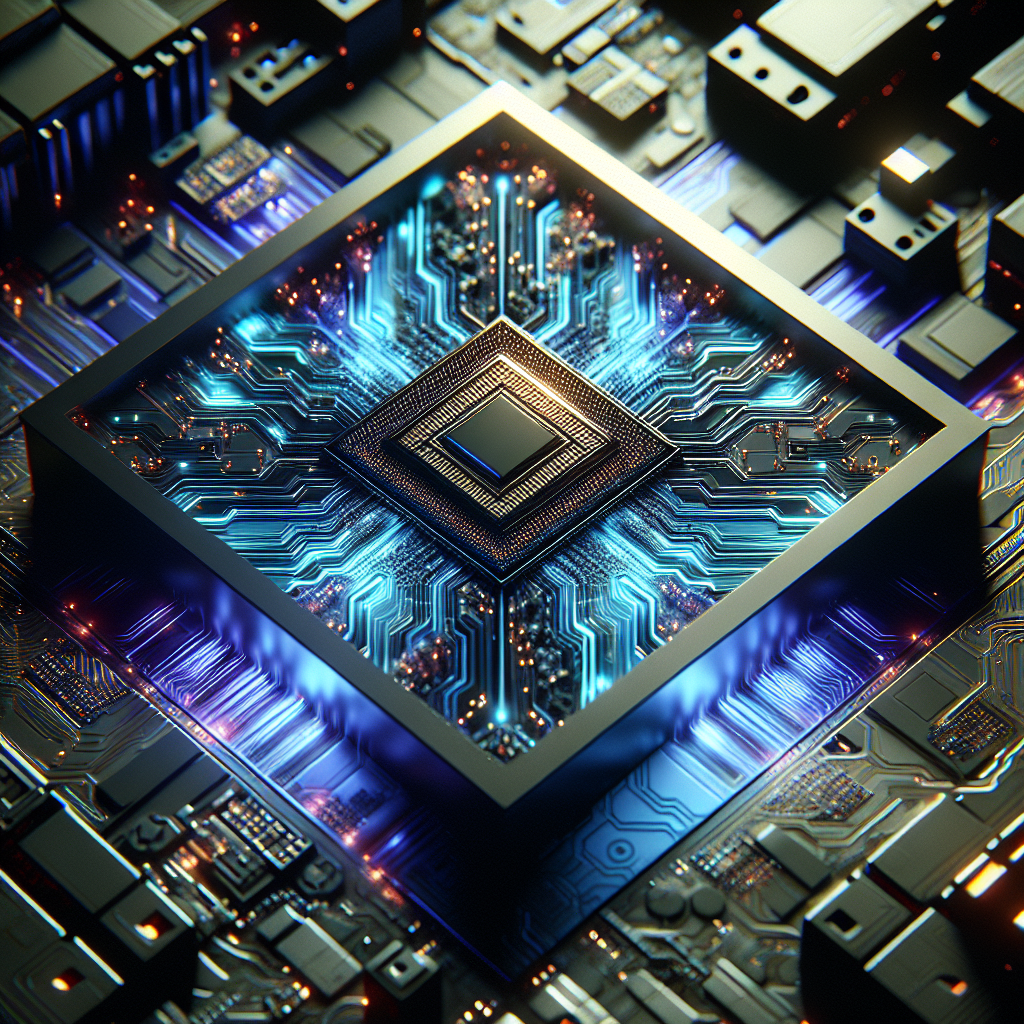
On December 9, 2025, a leading quantum research institution publicly announced the development of the world’s first 10,000-qubit processor. This monumental technical breakthrough represents a 100x scaling leap in quantum computing capabilities, moving beyond previous benchmarks and establishing a new frontier for quantum hardware. The achievement signals a critical inflection point, validating years of intensive research into scalable quantum architectures.
Technical Breakdown
Achieving a 10,000-qubit processor is not merely about adding more qubits; it signifies a profound mastery over the intricate challenges of quantum coherence, control, and error correction at an unprecedented scale. Prior to this, scaling beyond a few hundred qubits often introduced insurmountable noise and control complexities. This new processor, however, demonstrates a sophisticated architectural innovation that manages these issues effectively. Imagine trying to conduct an orchestra of 10,000 musicians, each playing a unique, highly sensitive instrument, all while ensuring perfect synchronization and harmony. This processor provides the “conductor” and “score” capable of such a feat.
* **Advanced Qubit Interconnectivity:** The processor likely employs a novel chip architecture that significantly enhances qubit-to-qubit connectivity without introducing excessive crosstalk. Traditional designs struggle with routing control lines and maintaining isolation as qubit counts increase. This breakthrough suggests a highly optimized 2D or 3D integration scheme, possibly leveraging superconducting transmon qubits or trapped ions, where each qubit can interact with a larger number of its neighbors, crucial for complex entanglement operations. This improved connectivity is vital for executing deeper quantum circuits and more robust error correction protocols.
* **Hardware-Level Error Mitigation:** At 10,000 qubits, error rates become a dominant concern. This processor integrates sophisticated hardware-level error mitigation and potentially early forms of fault-tolerant error correction. This isn’t just about detecting errors; it’s about actively correcting them in real-time without collapsing the quantum state. Techniques like surface codes or other topological quantum error correction schemes, previously theoretical for such scales, are likely being implemented or significantly advanced, moving beyond simple readout error correction to full operational error correction. This is akin to building self-repairing circuits directly into the quantum chip.
* **Scalable Control Systems:** Managing 10,000 individual qubits requires an equally advanced classical control infrastructure. The processor likely features highly integrated, low-latency control electronics capable of generating and delivering precise microwave or laser pulses to each qubit simultaneously. This involves innovations in cryogenic control systems, multiplexing techniques, and potentially on-chip classical processing units that can dynamically adjust control parameters based on real-time qubit state feedback. This level of control precision and parallelism is a cornerstone of the 100x scaling leap, ensuring that all qubits can be manipulated coherently and reliably.
Why This Matters
The 10,000-qubit processor is not just a scientific curiosity; it’s a foundational shift that will ripple through the tech industry, impacting everything from software development to corporate strategy. This scale moves quantum computing from theoretical promise to tangible, albeit still nascent, practical utility.
For Developers
This 10,000-qubit milestone opens up entirely new avenues for quantum algorithm development and optimization. Developers can now design and test algorithms that were previously computationally intractable even on the largest simulated quantum machines. The increased qubit count, coupled with improved coherence and error mitigation, means:
* **Complex Algorithm Viability:** Algorithms like Shor’s for factoring large numbers or advanced Grover’s search variants become more viable for practical problem sizes. Developers can explore hybrid quantum-classical algorithms with significantly larger quantum components, pushing the boundaries of variational quantum eigensolvers (VQE) for chemistry or quantum approximate optimization algorithms (QAOA) for combinatorial problems.
* **New SDKs and Programming Paradigms:** Expect a rapid evolution in quantum software development kits (SDKs) and programming languages. These tools will need to abstract away the increased hardware complexity while exposing the enhanced capabilities. Developers will need to adapt to new error correction primitives and potentially new quantum gate sets optimized for this scale. Learning quantum assembly languages and understanding hardware-specific optimizations will become increasingly valuable skills.
* **Focus on Fault Tolerance:** This scale brings fault-tolerant quantum computing (FTQC) into sharper focus. Developers will begin to experiment with implementing logical qubits, which are encoded across multiple physical qubits to protect against errors. This shift requires a deeper understanding of quantum error correction codes and their practical implementation, moving beyond noisy intermediate-scale quantum (NISQ) devices.
For Businesses
For businesses, the 10,000-qubit processor signifies a critical acceleration in the timeline for quantum advantage, demanding immediate strategic planning and investment. The potential for disruptive innovation across multiple sectors is now more concrete than ever before.
* **Accelerated Drug Discovery and Materials Science:** Pharmaceutical companies can anticipate faster and more accurate simulations of molecular interactions, potentially reducing drug discovery timelines from years to months. Materials scientists can design novel materials with unprecedented properties, optimizing everything from battery efficiency to superconductivity. Businesses in these sectors must invest in quantum talent and partnerships now to gain a competitive edge.
* **Financial Modeling and Optimization:** Financial institutions can leverage this power for more sophisticated risk analysis, portfolio optimization, and fraud detection. Complex Monte Carlo simulations, crucial for derivatives pricing, could run orders of magnitude faster. This will enable real-time market insights and more robust financial products, requiring banks to integrate quantum capabilities into their quantitative analysis teams.
* **AI and Machine Learning Breakthroughs:** The enhanced computational power can fuel advancements in quantum machine learning, enabling more efficient training of complex models, pattern recognition, and data analysis. Businesses relying heavily on AI, from tech giants to specialized analytics firms, must explore how quantum processors can augment or accelerate their existing AI pipelines, potentially unlocking new forms of intelligence.
* **Cybersecurity Implications:** While not immediately a threat, the scaling of quantum processors accelerates the need for post-quantum cryptography (PQC) adoption. Businesses handling sensitive data must prioritize migrating to quantum-resistant encryption standards, as the theoretical threat of quantum computers breaking current encryption schemes becomes a more practical concern within the next decade.
What’s Next
The immediate future will see a fierce race among quantum hardware developers to replicate and surpass this 10,000-qubit milestone, focusing on improving qubit quality and error rates. We can expect the emergence of new quantum benchmarks and a clearer roadmap towards achieving truly fault-tolerant quantum computing within the next 3-5 years. Commercial access to such powerful machines, likely via cloud platforms, will expand, driving further application development and industry-specific solutions.
Key Takeaways
- The 10,000-qubit processor represents a 100x scaling leap, fundamentally redefining the current state of quantum hardware capabilities.
- This breakthrough is driven by advanced qubit interconnectivity, hardware-level error mitigation, and sophisticated scalable control systems.
- Developers must prepare for new algorithm design paradigms and evolving SDKs, while businesses need to strategically invest in quantum talent and explore disruptive applications across various industries.